
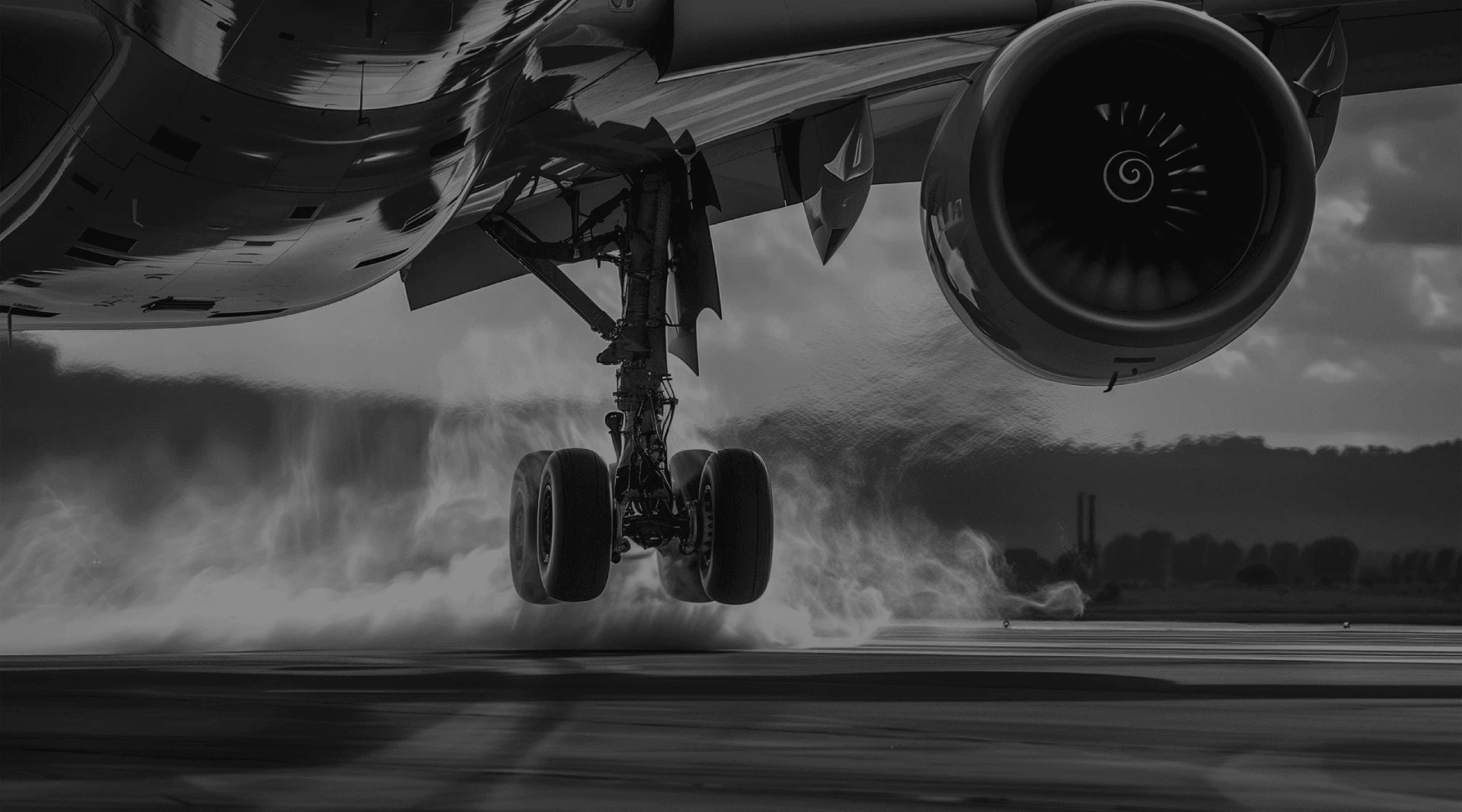
ABARnet™ Runway Uptime Platform
Aircraft Braking Action Reports turn every arriving aircraft into a friction sensor, so airports and airlines see runway performance now and up to 180 minutes ahead.
FAA-recommended · ASTM-compliant · Any aircraft type · No hardware
- 26M+
- landings analyzed [PLACEHOLDER: confirm figure]
- 7K+
- new landing reports every day
- 340+
- airports with ABARnet data
- 30–180 min
- friction forecast window
ABARnet is self-learning. Every recorded landing improves the model.
The current standard
Runway condition reporting still runs on pilot reports and a truck.
PIREPs are one word over the radio. Manual inspections are a snapshot from one vehicle at one moment. When surface friction changes faster than teams can react, the consequences stack: runway occupancy climbs, delays compound, and runways stay closed longer than they need to.
- 01Nearly 25% of commercial aviation accidents from 2013–2022 were runway excursions.
- 02Excursions cost the global industry an estimated $4 billion in 2019 alone.
- 03Every unnecessary closure is chemical, crew hours, and schedule you don't get back.

Science, not subjectivity.
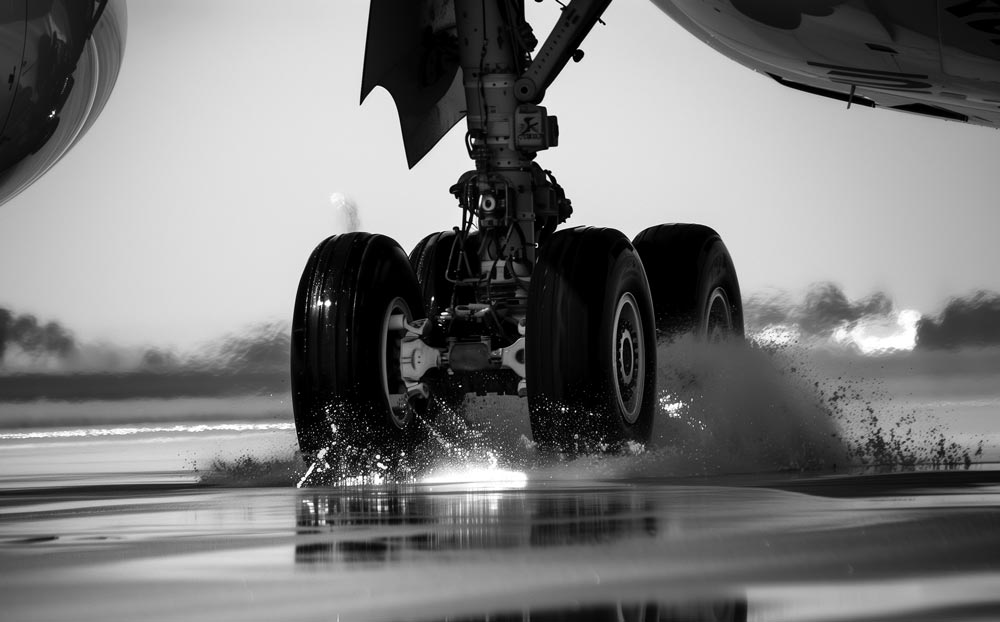
Aircraft Braking Action Reports
From touchdown to report, automatically.
An ABAR is a friction measurement captured from an aircraft's own sensors during rollout, converted into standard runway-condition terms, and delivered to everyone who needs it, within moments of landing.
Capture
Approved onboard sensors record brake and thrust telemetry, control surfaces, speed, deceleration and configuration from touchdown through taxi.
Compute
AST's models solve for the actual wheel-braking coefficient, accounting for aerodynamic drag, reverse thrust, spoilers, rolling resistance and runway slope.
Report
The coefficient becomes a standard braking-action term, compatible with RCAM, FICON and NOTAM language, and reaches towers, ops centers and airline systems through the cloud.
- 01
Capture
Approved onboard sensors record brake and thrust telemetry, control surfaces, speed, deceleration and configuration from touchdown through taxi.
- 02
Compute
AST's models solve for the actual wheel-braking coefficient, accounting for aerodynamic drag, reverse thrust, spoilers, rolling resistance and runway slope.
- 03
Report
The coefficient becomes a standard braking-action term, compatible with RCAM, FICON and NOTAM language, and reaches towers, ops centers and airline systems through the cloud.

Platform
From every landing to your next treatment decision.
Three connected services give crews the evidence to time treatments, sequence runways, and confirm what worked.
ABARs
Objective braking-action reports from every landing aircraft, shared by airports, airlines, pilots and ATC.
- Replaces subjective PIREPs and inspection snapshots
- Reports in standard RCAM / FICON terminology
360° Runway Analytics
Braking performance for every landing rollout, read in 100-ft segments along the full runway.
- Targets inspection, friction testing and treatment to the segments that need it
- Separates a one-off from a repeatable pattern
Friction Forecasts
AI models trained on 26M+ landings predict braking action 30 to 180 minutes ahead.
- Plan treatments and inspections before conditions degrade
- Return runways to service sooner after weather events
High Brake Demand
Where aircraft brake hardest, mapped along the runway.
A High Brake Demand landing is one where braking workload ran high, located from touchdown to turnoff. HBDs are common even at medium-or-better braking action, and they show where workload concentrates on your runway.
Use 360° Runway Analytics to tell a single hard stop from a pattern that warrants a closer look.
Standards
Recommended by the FAA. Compliant with ASTM.
Reporting the actual braking action of landing aircraft, in real time, is a stated FAA priority. AST is the only ABAR provider for any aircraft type, regardless of manufacturer.
Transport Canada
ABARs comply with Transport Canada directives on runway condition reporting.
Transport Canada →ASTM International
ABARnet reports meet ASTM braking-action standards for accuracy and repeatability.
FAQs →
Runways don't file reports. Aircraft do. Our platform makes sure the airport can read them, so crews know which runway to treat next, where, and to what extent the last treatment worked.
Joe Vickers
CEO, Aviation Safety Technologies
Former Managing Director, United Airlines Operations Control Center · Licensed pilot
Getting on the network
No hardware. No aircraft modification. Four steps.
Contact AST
Tell us your airport or fleet. We scope the subscription.
Download the spec
Your performance engineer or FMC provider receives AST's free file specification.
Load and validate
The reporting script runs on a test aircraft. AST confirms the landing reports are correct.
Train and go live
Teams learn ABARs, Friction Forecasts and HBD reports at their own pace. Reports start flowing.
- 01
Contact AST
Tell us your airport or fleet. We scope the subscription.
- 02
Download the spec
Your performance engineer or FMC provider receives AST's free file specification.
- 03
Load and validate
The reporting script runs on a test aircraft. AST confirms the landing reports are correct.
- 04
Train and go live
Teams learn ABARs, Friction Forecasts and HBD reports at their own pace. Reports start flowing.
What you need
- Hardware required
- None
- Aircraft modification
- None. The script runs independently of aircraft systems.
- Aircraft supported
- Any modern type. Boeing, Airbus, Embraer, Bombardier.
- Access
- Browser interface + free APIs for existing systems.
- Pricing
- Airlines: tiered by fleet size. Airports: minimal, optionally recovered through landing fees.[PLACEHOLDER: confirm pricing posture]
Request a demo
See your runway the way the aircraft see it.
Tell us about your airport or fleet and we'll walk you through ABARnet with data from the network.
- No hardware to install
- Works with any aircraft type
- Free APIs and browser access